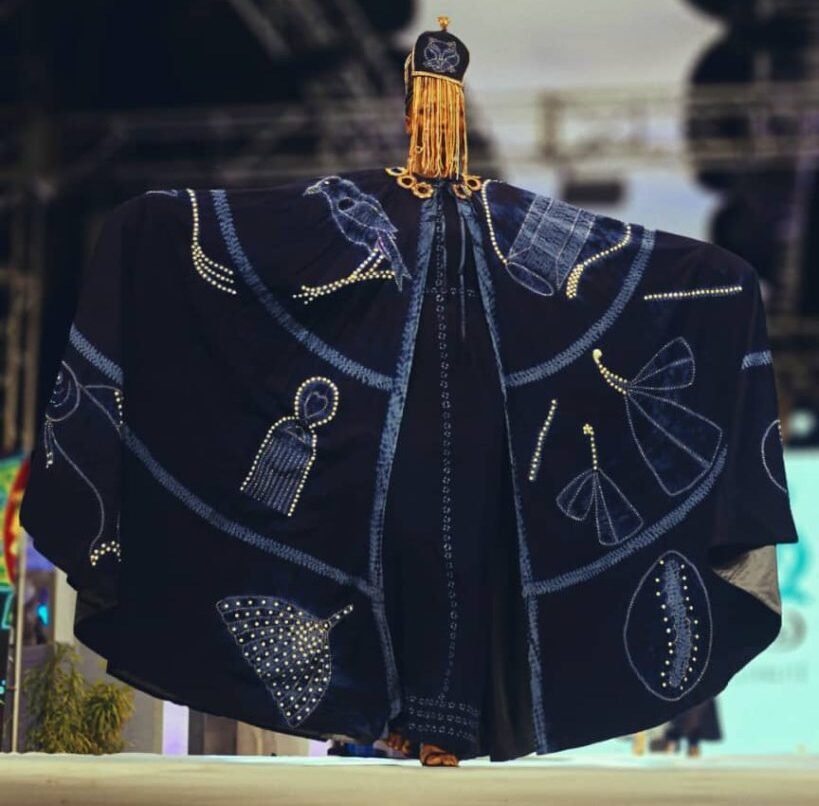
Benin’s Indigo: A Prestige Fabric in Search of Its Value Chain
Benin’s indigo textile sector is at a turning point. For decades, Ahovo — this prestige fabric dyed with natural indigo and inherited from the ANIAMBOSSOU community of Ouidah — developed largely outside Africa’s major textile trends. Today, at a time when global demand for natural, traceable and culturally rooted materials has never been stronger, Benin holds a rare strategic asset. Yet the gap between know-how and a structured value chain remains considerable. This is precisely what the current evolution of Benin’s indigo sector reveals.
A structural imbalance, but not an inevitability
Benin’s indigo textile sector is built around essentially artisanal, family-based production. Indigofera leaves are cultivated, fermented and then processed into dye baths using methods passed down orally from generation to generation. Historically, indigo dyeing was considered one of the country’s most lucrative craft activities, generating more income than weaving itself. Yet the activity gradually declined throughout the twentieth century, before a handful of determined entrepreneurs brought it back to the centre of a tangible economic project.
The historical roots of a fragmented value chain
The development of Benin’s indigo value chain has long been shaped by informal and family-based arrangements, in the absence of interprofessional coordination. This situation has had lasting effects on the sector’s ability to meet demand:
Insufficient and irregular production volumes, limiting the ability to fulfil formal orders;
Variable quality from one workshop to another, hindering access to domestic and international premium markets;
Isolated indigo producers, without access to finance, distribution channels or certification tools.
This model has certainly helped preserve an exceptional cultural heritage, but it has not created a sustainable economic value chain.
A growing global market, but supply remains underdeveloped
Paradoxically, this is where the greatest opportunity lies. Global demand for natural, ethical and culturally authentic textiles is experiencing structural growth. African and international fashion designers are looking for distinctive, traceable materials that carry meaning. African indigo meets all these criteria.
A new generation of brands and designers in Benin, Côte d’Ivoire, Senegal and across the African diaspora is now incorporating heritage textiles into contemporary collections with a strong sense of identity. This market exists, it is connected, and it remains largely underserved by the current supply from Benin’s indigo sector.
Couleur Indigo: the Beninese exception showing the way
There is, however, a Beninese player that demonstrated before others that an integrated business model built around indigo was possible. Nadia Adanlé built Couleur Indigo in Ouidah in response to the void left by the absence of industrial structuring.
Founded on the know-how of the ANIAMBOSSOU community, Couleur Indigo has developed a vertical model organised around three complementary entities: the production of indigo leaves in the fields, dyeing and textile creation, and finally the recycling of garment offcuts, an activity that employs people with disabilities. The results speak for themselves: pieces exported to Europe and America, steadily growing international visibility, and cultural legitimacy now affirmed at the highest level. Benin’s First Lady, Nathalie Villette-Wadagni, wore a Couleur Indigo creation during the presidential inauguration.
This ceremonial gesture is far from insignificant. It places Ahovo exactly where it deserves to be: on the national stage, at the heart of the country’s most solemn state occasions.
Nadia Adanlé has also gone a step further by authoring Élu, ce bleu en fête !, a book devoted to African textiles, which she wrote herself to tell the story of these fabrics from within. This approach brings an essential question back to the centre: who has the legitimacy to tell the story of African textiles, and within what economic and cultural framework is that story constructed?
The Couleur Indigo model works, supported by exports, cultural tourism and a loyal domestic customer base. It is the exception that, precisely, shows other players in the value chain that this is a path they can follow.
Concrete signs that a more structured sector is emerging
The Symposium sur l’Indigo Africain (SIA), held in Ouidah and bringing together communities of indigo producers from West and Central Africa, marked an initial step towards collective professionalisation. The stated objective was clear: to compare working methods, establish common standards and lay the foundations for a structured interprofessional organisation.
Benin also has a structural advantage that remains underexploited. As Africa’s leading cotton producer, with annual volumes exceeding 300,000 tonnes, the country has embarked on an ambitious industrial shift through the Glo-Djigbé Industrial Zone (GDIZ), which employs more than 10,000 people in the textile sector. Indigo could naturally find its place within this trajectory, not only as a niche artisanal product, but as a premium segment of a national textile industry that is still being built.
These signals are converging. The indigo value chain is beginning to take shape as a sector in its own right. But between collective discussion and the implementation of concrete operational mechanisms — quality standards, floor prices, access to finance, distribution channels — there is still a long way to go.
Three priorities for strengthening Benin’s indigo value chain
Three major priorities emerge for supporting the economic development of indigo textiles in Benin. These priorities capture both the sector’s current structural weaknesses and its most urgent areas for action. For an entrepreneur, each also represents a concrete point of entry into the value chain.
Organising producers
Bringing indigo producers together in cooperatives or professional groups is a prerequisite for any scale-up. Without an organised critical mass, it is impossible to guarantee consistent volumes, harmonise quality or negotiate contracts with organised buyers.
Financing
Beyond existing public schemes, private and blended mechanisms remain to be developed: microfinance dedicated to artisans, co-productions with fashion brands, the development of branded content and craft tourism. Indigo producers themselves identify financing as the main bottleneck to their development.
Structuring the market
Digital distribution, origin certification, access to African and international e-commerce platforms, aggregation of rights over creations: these are all still weak links where new players can position themselves before the market consolidates.
Copying industrial wax would be a strategic mistake
Wax developed around a model based on volume, affordable prices and mass distribution, relying on foreign industries, mainly Dutch and later Chinese. This model worked because it responded to large-scale popular demand. Trying to reproduce it for Beninese indigo would be a fundamental analytical mistake.
Ahovo is not a mass-market fabric. It is a prestige fabric, carrying a deep cultural identity, a deliberately limited scale of production and recognised heritage legitimacy. These attributes naturally position it in the premium, artisanal segment, in direct contrast to a volume-driven model.
The real challenge, therefore, is not to compete with wax or to industrialise at all costs a form of know-how whose value stems precisely from its human and artisanal character. With the resources and strengths available, the objective is to build an indigo value chain that can endure: differentiated, rooted in its cultural realities, and connected to continental and global distribution channels.
Frequently Asked Questions
What is Ahovo, Benin’s indigo fabric?
Ahovo is the name given in the Fon language to the indigo fabric produced in southern Benin, mainly in Ouidah. Literally meaning “prestige fabric”, it is made from Indigofera leaves processed using ancestral dyeing techniques inherited from the ANIAMBOSSOU community. Historically, this fabric was reserved for ceremonies and people of high rank.
Why has Benin’s indigo value chain struggled to become more economically structured?
Three main factors explain this difficulty: production fragmented among isolated artisans, limited access to financing to develop production capacity, and the absence of structured distribution channels connecting producers with domestic and international markets.
Which Beninese players are driving the revival of indigo textiles?
Couleur Indigo, founded by Nadia Adanlé in Ouidah, is the most visible and most integrated player in the value chain. It covers the entire chain, from cultivating indigo leaves to marketing finished pieces, including dyeing, design and recycling. Other artisanal initiatives exist, mainly in the south of the country.
Are there concrete opportunities for entrepreneurs who are not artisan dyers?
Yes, and this may be where opportunities face the least competition. Benin’s indigo value chain needs non-craft expertise: structuring cooperatives, certification and traceability, digital distribution, e-commerce, training to meet international standards, and the development of partnerships with African and international fashion brands. The growing global demand for natural and authentic textiles is expanding market opportunities for all players who contribute to this value chain.
Can Benin’s indigo fabric establish itself in international markets?
Ahovo has all the attributes required to succeed in premium markets: natural qualities, cultural authenticity, scarcity and aesthetic differentiation. The barriers are operational, not commercial. Once the value chain is able to guarantee consistent volumes and uniform quality, market opportunities exist among African fashion designers, the diaspora, and Western markets seeking ethical and traceable materials.